The Blueprint to Tom Sosnoff’s Ideal Portfolio in 2025
How the Tastytrade founder’s 2025 “ideal portfolio” reveals timeless principles of probability-based investing and disciplined risk management.
Search for a command to run...
How the Tastytrade founder’s 2025 “ideal portfolio” reveals timeless principles of probability-based investing and disciplined risk management.
No comments yet. Be the first to comment.
A data-driven breakdown of global stock market size, the top 10 largest markets by capitalization, and the leading companies that dominate each one.

A research-driven breakdown of Musk’s Utility × Scale framework — and why it consistently produces companies with outsized global influence.
Financial Researcher
3 posts
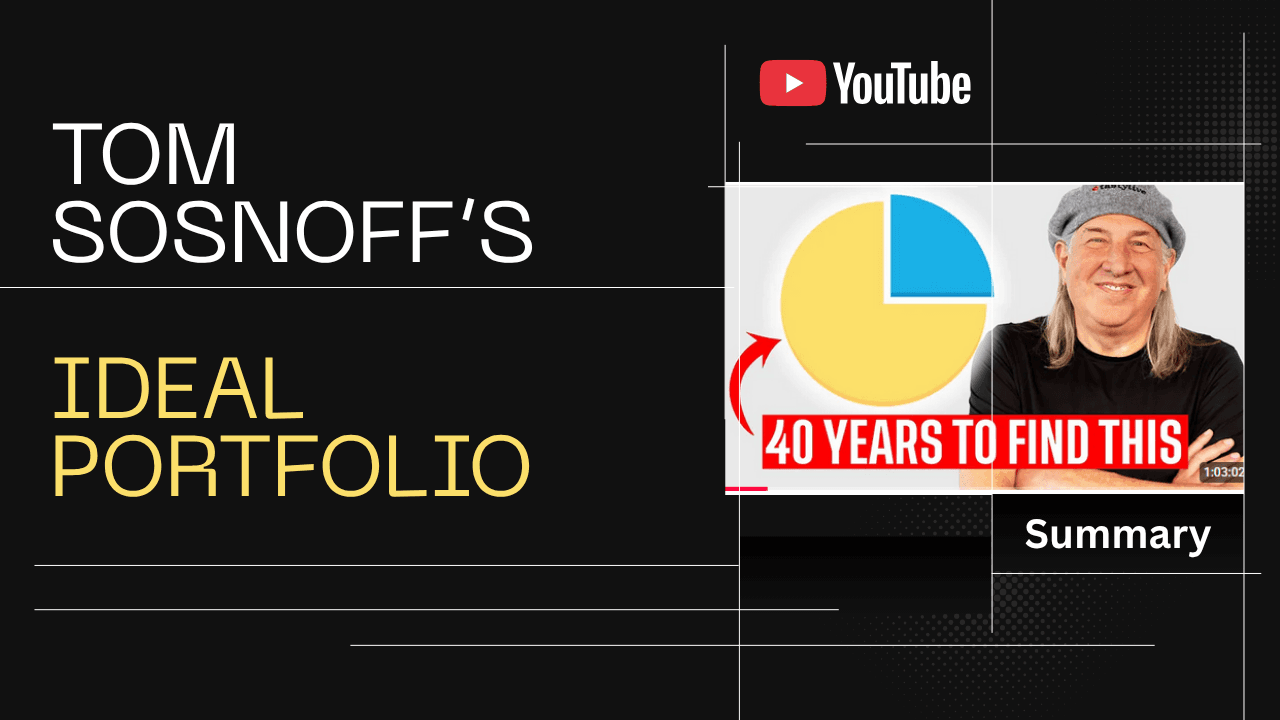
At the beginning of 2025, Tom Sosnoff — the co-founder of Tastytrade and Thinkorswim — outlined what he called his “ideal portfolio” for the year ahead. Rooted in probability, consistency, and mechanical trading discipline, Sosnoff’s blueprint quickly sparked discussion among active investors.
Now, as the year winds down, it’s an ideal moment to revisit his framework and extract the key lessons and approaches that have proven timeless.
Sosnoff’s ideas go beyond a single year’s outlook; they represent a systematic way of thinking about risk, opportunity, and portfolio construction that remains relevant in virtually any market environment.
Sosnoff challenges the traditional notion of diversification by asset class. Instead of spreading capital across many uncorrelated holdings, he focuses on diversifying by strategy.
That means including multiple trading approaches—short premium positions, defined-risk spreads, synthetic stock trades, and pair strategies—within a single portfolio.
This model doesn’t aim to eliminate volatility but to manage it through variety in trade structure and probability.
At the heart of Sosnoff’s framework is balance: roughly 50% in options strategies and 50% in equities or ETFs.
The options portion focuses on income generation through credit spreads, strangles, and iron condors, while the stock portion provides directional exposure and long-term growth.
The goal is to maintain flexibility—adjusting capital allocation dynamically based on volatility conditions rather than fixed asset targets.
A recurring theme in Sosnoff’s philosophy is simple but powerful: “Trade often, trade small.”
By executing many small trades rather than a few large ones, investors can take advantage of the law of large numbers, allowing statistical edges to play out over time.
This approach also reduces emotional bias and makes it easier to manage losers before they become portfolio threats.
Implied Volatility (IV) is at the center of Sosnoff’s approach.
Rather than fearing volatility, he treats it as the trader’s edge. High IV levels mean option prices are inflated, creating opportunities for premium sellers. Sosnoff prefers to enter positions when IV Rank is 30 or higher, especially in liquid underlyings like SPY, QQQ, IWM, and GLD.
This method relies on the idea that markets tend to overprice risk, allowing systematic sellers to capture “excess premium” over time.
Sosnoff’s ideal trade duration lies in the 30–45 days-to-expiration (DTE) range.
This window maximizes theta decay—time value erosion that benefits option sellers—while minimizing exposure to unpredictable long-term market swings. Shorter durations also make it easier to adjust or roll positions proactively.
The portfolio is designed to target annualized returns of 15–20% with a maximum drawdown tolerance of around 25%.
These figures are realistic for traders who follow a mechanical, data-driven process. Sosnoff’s focus isn’t on maximizing return, but on maximizing probability of consistent success.
The 2025 blueprint includes exposure across asset classes and geographies:
U.S. indices such as SPY, QQQ, and IWM
Bonds and interest rate products like TLT and ZB
Commodities including gold (GLD), silver (SLV), and crude oil
Currency ETFs such as FXE and FXY for hedging dollar exposure
This structure ensures correlation diversity and a broader range of volatility opportunities.
Tom Sosnoff’s 2025 portfolio model isn’t a static set of holdings—it’s a dynamic system built on probability, mechanics, and behavioral discipline.
In a market where passive investing dominates, Sosnoff’s approach offers an alternative: an active, statistically grounded framework for consistent performance.
For traders and investors who want to combine market logic with tactical precision, this blueprint remains a compelling guide—not only for 2025, but for the evolving market environment ahead.
FinResearcher.com — Independent insights for smarter investing decisions.